

Stability, Visibility, and Control Across Interconnected Systems
IT systems are becoming increasingly interlinked and interconnected, and seemingly isolated problems can quickly cascade into organisation-wide issues. A single fault in a switch, a misconfigured firewall rule, a failing endpoint, or an unstable server can ripple outward, affecting authentication, file access, application performance, and user productivity within minutes.
Align IT Solutions provides infrastructure and network support as a first line of support for organisations dealing with underperforming IT systems. Our technicians troubleshoot the root cause of incidents, resolve them efficiently, and focus on preventing recurrence across hardware, software, and network assets. The objective is straightforward: restore stability without guesswork, minimise downtime, and keep day-to-day operations dependable.
This service is built for real environments where change happens constantly. New users join, devices age, patches roll out, applications evolve, and connectivity expectations rise. Infrastructure and network support must keep pace without introducing disruption, which is why our work balances rapid response with controlled correction.
Diagnosing the Root Cause, Not the Loudest Symptom
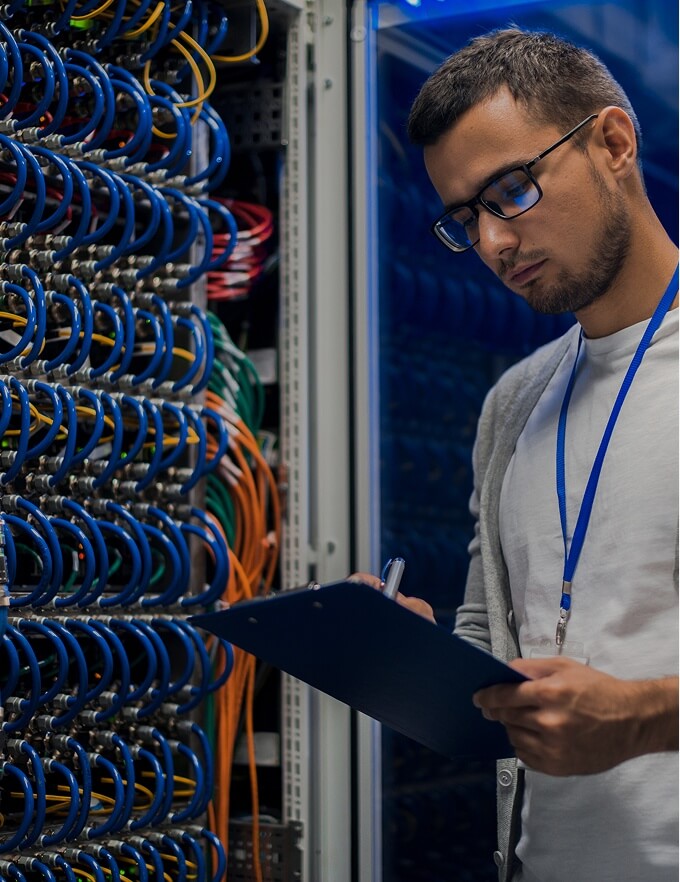
When issues surface, they often present as vague complaints: slow systems, intermittent drops, failed logins, or unstable access to shared resources. Treating these as isolated incidents usually leads to repeated disruption. We approach problems by tracing dependencies and isolating where failure originates, whether that is a hardware constraint, a configuration conflict, a routing issue, a software fault, or a capacity shortfall.
Our technicians validate impact, identify what changed, map what systems are involved, and apply remediation that addresses the actual source. Resolution includes verification steps to confirm stability under normal load, not just a temporary return to service.
Operational Coverage Across Core Assets
Infrastructure support is not confined to one layer. Performance and reliability depend on the interaction between devices, network paths, services, and endpoints. We provide support across the operational stack, with attention to how assets behave together.
This includes incident handling for connectivity problems, device performance issues, server and service interruptions, and configuration related instability. By addressing hardware, software, and network assets in one cohesive support model, problems can be resolved without the handoffs that slow response and dilute accountability.
What Support Looks Like in Practice
Infrastructure and network support must function consistently under real operating conditions, not just during isolated incidents. Our work focuses on stabilising core systems, restoring confidence, and ensuring that issues are resolved in a way that supports ongoing operations rather than creating future risk.

Connectivity and Routing
Network issues are rarely binary. We investigate intermittent loss, latency, and congestion, then stabilise routing, switching, and Wi Fi behaviour so connectivity remains consistent across teams, locations, and usage patterns.

Servers and Shared Services
When core services falter, everything downstream suffers. We validate system health, service availability, and resource utilisation, then correct the constraints causing instability across shared platforms and environments.
Endpoint and Peripheral Dependencies
Printer failures, device conflicts, and endpoint slowdowns often signal broader issues. We identify whether root cause sits with hardware condition, drivers, policy configuration, or network behaviour affecting connected systems.

Configuration and Change Control
Many disruptions come from small changes made under time pressure. We review configuration states, identify drift, and apply controlled corrections that preserve stability without blocking necessary updates.
Common Incident Patterns We Resolve
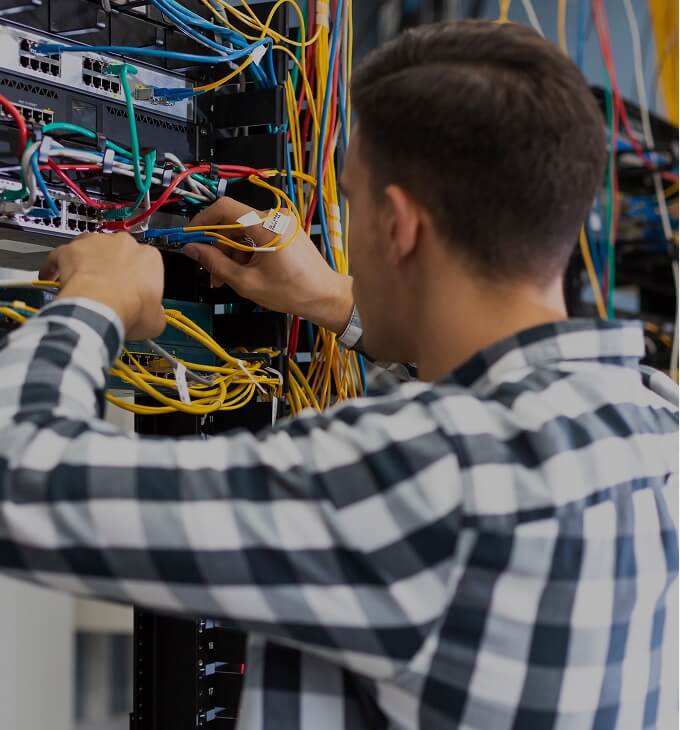
Infrastructure and network incidents tend to repeat because the underlying cause remains in place. Our support focuses on resolving the immediate disruption while also removing the condition that triggers recurrence.
- Intermittent connectivity and unstable Wi Fi that impacts collaboration tools and shared systems
- Performance bottlenecks caused by hardware limitations, capacity constraints, or misaligned configuration
- Network access issues linked to authentication failures, permissions conflicts, or policy demonstrable drift
- Server and service interruptions that trigger cascading failures across dependent applications
- Device-related incidents where endpoint conditions disrupt network behaviour or shared resource access
Preventing Recurrence Through Proactive Support
Our service ethos is to deliver proactive, forward-thinking support that keeps operations performing seamlessly over time. That means we do not stop at incident closure. Where appropriate, we document the underlying cause, identify any related weaknesses, and recommend corrective actions that reduce the likelihood of repeat disruption.
Proactive support also involves observing patterns. If a particular type of fault occurs repeatedly, it usually points to a structural issue such as ageing equipment, inconsistent configuration, unmanaged change, or weak monitoring. Addressing these conditions improves stability far more than repeated urgent fixes.
This approach supports resilience without overengineering. The goal is not complexity. The goal is controlled, reliable performance across the infrastructure organisations already rely on.
Digital Transformation at Your Fingertips
We’re just one short message away. Contact us today so that we can work together and elevate your business.
Let’s Connect